
Origins: The cortado is a Spanish espresso drink that emerged in the early 20th century as a working-class favorite in coffee bars of Spain. It originated in places like Spain’s Basque region and quickly became a cherished part of Spanish coffee culture. The name cortado literally means “cut” in Spanish, referring to how a splash of warm milk “cuts” the sharp acidity and intensity of a bold espresso. Traditionally, a cortado is made with equal parts espresso and steamed milk (about a 1:1 ratio), yielding a small balanced beverage that’s smoother than a straight espresso yet far less milky than a latte. Unlike Italian-style drinks, the milk in a cortado is lightly steamed without much foam or froth, giving it a silky but flat texture – a modest approach that reflects Spanish café culture’s preference for a relaxed, unfussy coffee break.
Global Evolution: After gaining popularity across Spain (where ordering a café cortado became commonplace), the cortado began to travel. It spread to neighboring Portugal (where a larger, 1:3 espresso-to-milk cousin called the galão took hold) and eventually crossed the Atlantic. During the mid-20th century, Spanish and Portuguese colonial influence helped introduce the cortado to Latin America, most notably in Cuba. There it evolved into the cortadito, a local twist featuring equal parts espresso and sweetened condensed milk instead of fresh milk – a reflection of Cuba’s sugarcane culture and the limited availability of fresh dairy in earlier decades. The cortadito became a staple of Cuban coffee culture. In the 1960s, Cuban Americans brought this tradition to Miami’s Little Havana, making the cortadito (and the unsweetened cortado) an integral part of the coffee scene in Cuban-American communities in Florida. Fast-forward to the third-wave coffee era, and the cortado’s reputation spread worldwide as a specialty café favorite. American craft coffee shops embraced its no-nonsense format, even if sometimes under different names. On the U.S. West Coast, Blue Bottle Coffee famously popularized the “Gibraltar,” a cortado served in a 4.5 oz Libbey Gibraltar glass – born from a happy accident when baristas started using small durable glasses to “cut” their espresso with milk for a quick pick-me-up. “It’s really a cortado, but we didn’t know that at the time,” admitted Blue Bottle founder James Freeman, highlighting that the trendy off-menu Gibraltar was essentially a cortado by another name. The cortado’s rise continued into mainstream culture: by 2025, Starbucks added a traditional cortado to its core menu (along with a flavored oatmilk version) after growing consumer demand, especially in markets with strong Latin coffee influences like South Florida. What began as a humble Spanish espresso-with-milk has now become a global coffee staple, adapted in various forms yet always prized for its straightforward balance of coffee and milk.
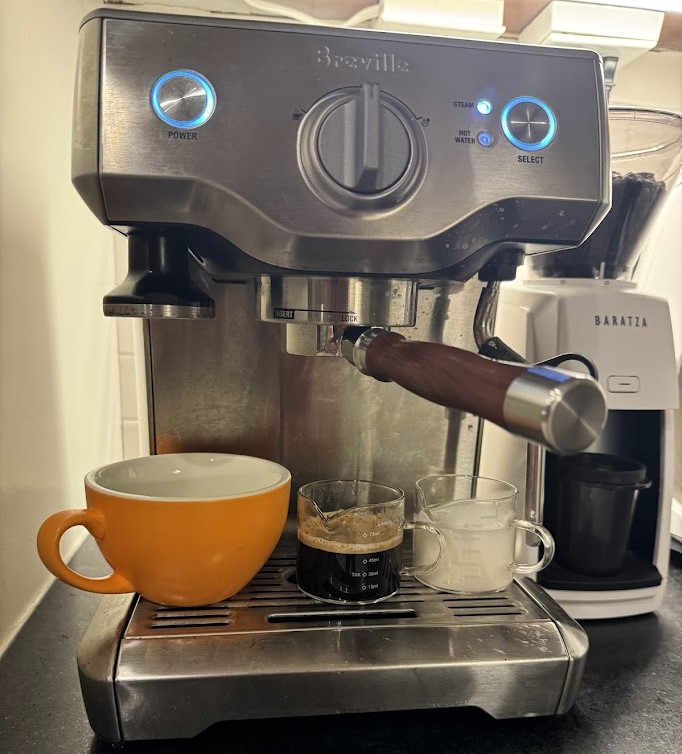
Cortado vs. Similar Drinks: The cortado often invites comparison with a few other small espresso-and-milk drinks – chiefly the espresso macchiato, the Gibraltar, and the flat white – each with distinct origins and character. While all are espresso-based with milk, they differ in ratio, preparation, and presentation. A classic caffè macchiato (Italian for “marked”) is essentially a **single shot of espresso “marked” with just a dollop of foamed milk on top. It’s much stronger and smaller than a cortado, since a macchiato might be ~90% espresso with only a spoonful of milk foam (no substantial steamed milk added) – basically an espresso with a light milky cap for a hint of sweetness. On the other end, a flat white – which emerged in Australia (or New Zealand, according to some debates) in the 1980s – is a slightly larger drink typically made with a double espresso (often ristretto) and smooth microfoamed milk, usually about a 1:2 or 1:3 espresso-to-milk ratio. A flat white is basically a smaller, stronger latte crafted with very finely textured milk; it’s traditionally served in a 5–6 oz ceramic cup and features latte art on top, indicative of its velvety microfoam. This gives it a hotter temperature and a lighter, creamier mouthfeel compared to the cortado’s flatter milk, even though the coffee-to-milk proportions are similar on paper. The Gibraltar, as noted, is essentially the American craft-coffee version of a cortado: a double espresso plus ~2 ounces of steamed milk served specifically in a 4.5 oz Gibraltar glass (the drink’s namesake). Some consider Gibraltar and cortado interchangeable, the main difference being the glass and slightly foamy milk texture of the Gibraltar compared to the more traditional flat steamed milk of a Spanish cortado. To summarize these differences at a glance, see the comparison table below:
| Drink | Origin & Cultural Roots | Espresso:Milk Ratio | Milk Preparation | Typical Serving | Flavor Profile & Notes |
| Cortado | Spain (early 20th c.), popularized in Basque & Spanish coffee culture | ~1:1 (equal parts espresso and milk) | Steamed milk, no heavy foam (smooth texture) | ~4–4.5 oz small glass or cup | Balanced and mellow; espresso’s intensity “cut” by milk for a smooth, not-too-acidic taste |
| Espresso Macchiato | Italy (traditional Italian espresso bar culture) | ~4:1 or more (mostly espresso with a “mark” of milk) | Tiny dollop of foam only (just enough to mark the espresso) | ~2 oz demitasse cup | Very bold & intense; essentially an espresso with a subtle touch of creaminess from the foam, no dilution |
| Gibraltar | San Francisco, USA (2005, Blue Bottle Coffee) | ~1:1 (double espresso ~2 oz + ~2–3 oz milk) | Steamed milk with light microfoam (often allows latte art); defined by its glass vessel | 4.5 oz Libbey Gibraltar glass tumbler | Rich and aromatic; a “short, strong latte” style with an espresso-forward flavor and a quick, creamy finish |
| Flat White | Australia/New Zealand (1980s café culture) | ~1:2 (double espresso ~2 oz + ~4 oz milk) (smaller & less milk than a latte) | Finely textured microfoam (“flat” smooth top, no stiff froth) | ~5–6 oz ceramic cup, often with latte art | Velvety and smooth; stronger than a latte but silkier than a cortado, with a hotter temperature and refined foam texture |
Cultural Significance & Interesting Facts: Despite its small size, the cortado has had an outsized cultural impact in the coffee world. It became a symbol of Spain’s unhurried coffee tradition – a drink meant to be savored “sin prisa, pero sin pausa” (without hurry but without pause) as the Spanish would say. This ethos contrasts with Italy’s espresso culture (where downing a quick shot at the bar is common and milky coffee drinks are usually reserved for mornings), highlighting how the cortado fit the Spanish preference for enjoying espresso with a relaxed touch of milk any time of day. Across the Atlantic, the cortado/cortadito also represents comfort and community in Latinx cultures – one Starbucks manager in Miami noted that no family gathering is complete without coffee, cortado included. An interesting serving custom has emerged in some specialty cafés: a cortado often comes accompanied by a small glass of sparkling water. This European practice isn’t just for flair – the bubbly water serves as a palate cleanser between sips, refreshing the taste buds so the next sip of cortado’s espresso-and-milk harmony can be fully appreciated. The cortado’s devoted following includes both coffee purists and casual drinkers – even a new generation of influencers and celebrities have taken to it. For instance, YouTube star and coffee entrepreneur Emma Chamberlain has declared the cortado one of her favorite coffee drinks and shared her own twist for the “perfect cortado” (she adds a bit of almond milk creamer to make it extra velvety). With major coffee chains now embracing it and coffee aficionados worldwide singing its praises, the cortado has transcended its humble origins. Today it stands as a cult favorite that bridges espresso intensity and milky comfort, a small but mighty drink with a rich history and a global fan base.